
Many of the recently publicised data breaches in the retail industry have been caused by the exploitation of wireless vulnerabilities. Although retailers have been using wireless technology to drive business efficiencies for over twenty years, it’s only recently that sophisticated thieves have recognised the potential of an unprotected network.
These kinds of wireless deployments offer malefactors the perfect entry point into the network from which they can access and steal valuable customer information. Many retailers continue to rely only on traditional security systems such as firewalls, VPNs, and/or network segmentation to secure their networks but these defenses are no longer enough. Wireless intrusion prevention technologies are needed to prevent wireless attacks that can include the following:
Rogue access points
A rogue access point (AP) is an unauthorised wireless device physically connected to the wired network. A rogue AP can be installed by a careless employee/contractor or a malicious attacker. It is important to realise that rogues can show up on any network segment. Even if POS devices are on a separate network segment, rogue APs can be connected to these networks.
Identity theft
A hacker can masquerade as an authorised wireless device and connect to an authorised AP. Once on the network, all the rogue AP scenarios previously discussed are applicable.
Non-compliant access points
Wireless APs are frequently misconfigured. According to Gartner, a majority of all wireless security incidents will happen as a result of misconfigured devices.
Misconfigurations happen for a variety of reasons including human error and bugs in AP management software.
Denial of service
Hackers can easily perform wireless denial of service (DoS) attacks preventing devices from operating properly and stopping critical business operations.
Previously the customer trusted the merchant in the store to help them with what they needed and educate them about new items on the shelf. Over time, the personalised approach has been lost and consumers no longer felt they owed same loyalty to the retailer. Today, retailers are working to enhance their shoppers’ experience, knowing that at the same time customers have options to shop wherever and whenever they want, often without stepping inside a store.
Now the retailer has to anticipate a shopper’s buying behavior, whether the route they take begins with a website, social site or in the parking lot outside their store. They need to provide a compelling and personalised way to rekindle the special bond between the shopper and their brand.
It’s complex and confusing. But it also provides immense opportunities. The following infographic shows how retails believe the shopping experience will change over the next five years:
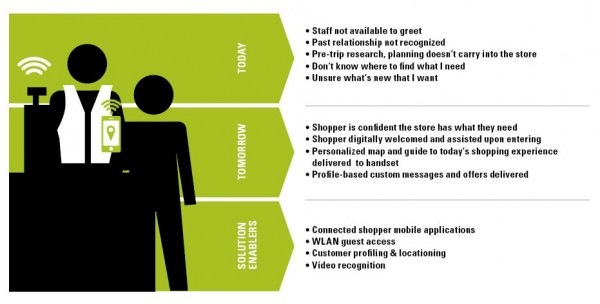
Shoppers’ habits are shifting as they move from feature phones to smartphones. These smartphone users are utilising their devices in the store for a range of uses including shopping lists, product reviews, price comparison or just to send a picture to a friend about the new item they found on sale. Consumers have a specific expectation of their retail experience and getting the information they want when they want it – inside or outside the store.
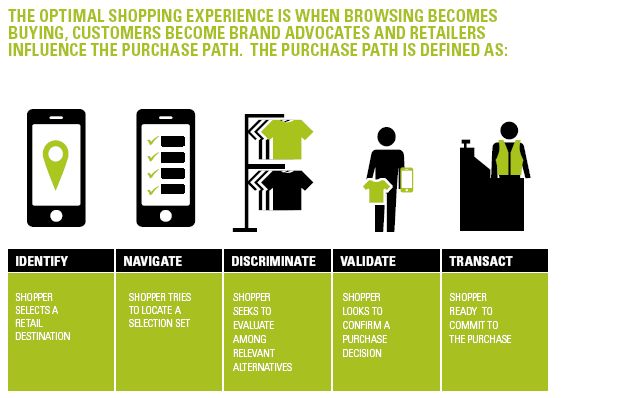
Without change, the retailer will fail to meet connected shopper’s expectations and will find it even more challenging to make the investments needed to catch up with their customers and their competitors. As the majority of purchases will still occur in the brick and mortar store, it is incumbent on the store to leverage the right technology to give customers the same kind of information and experience they get online, but with the added familiarity and immediacy of an in-person visit. Almost three-quarters of surveyed retailers believe that maintaining an engaging customer experience is going to be business-critical over the next five years. The best place to start is by looking at technology’s role in the customer experience.
This whitepaper examines the future of retail, including changing shopper mindsets and behaviors, and the new expectations shoppers have for their in-store experience.
Many of the recently publicised data breaches in the retail industry have been caused by the exploitation of wireless vulnerabilities. Although retailers have been using wireless technology to drive business efficiencies for over twenty years, it’s only recently that sophisticated thieves have recognised the potential of an unprotected network.
These kinds of wireless deployments offer malefactors the perfect entry point into the network from which they can access and steal valuable customer information. Many retailers continue to rely only on traditional security systems such as firewalls, VPNs, and/or network segmentation to secure their networks but these defenses are no longer enough. Wireless intrusion prevention technologies are needed to prevent wireless attacks that can include the following:
Rogue access points
A rogue access point (AP) is an unauthorised wireless device physically connected to the wired network. A rogue AP can be installed by a careless employee/contractor or a malicious attacker. It is important to realise that rogues can show up on any network segment. Even if POS devices are on a separate network segment, rogue APs can be connected to these networks.
Identity theft
A hacker can masquerade as an authorised wireless device and connect to an authorised AP. Once on the network, all the rogue AP scenarios previously discussed are applicable.
Non-compliant access points
Wireless APs are frequently misconfigured. According to Gartner, a majority of all wireless security incidents will happen as a result of misconfigured devices.
Misconfigurations happen for a variety of reasons including human error and bugs in AP management software.
Denial of service
Hackers can easily perform wireless denial of service (DoS) attacks preventing devices from operating properly and stopping critical business operations.
AU: 1800 462 388 · +61 401 189 448