
Homegrown AI platform could cut council costs and rates…
Roy Cohen has big ambitions for Auckland Transport’s in-house developed computer vision platform seeing potential not only to improve transport operations but also to eventually support a much wider range of council services and even help offset costs for Auckland ratepayers – and those in other jurisdictions globally.
As the capability moves into Auckland Council ownership as part of its council-controlled organisation reforms, Cohen, who is AT CTO, says the platform could be extended into new civic use cases and be monetised and sold to other agencies globally.
“It has provided significant value across different areas from enforcement to safety scenarios, and given us a bit of an operational edge to our business.”
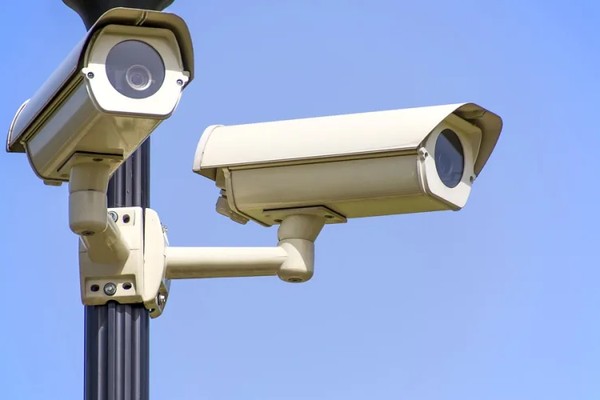
Theia, which won the Cloud-native Development and Hybrid Cloud Infrastructure category at the recent Red Hat APAC Innovation Awards for Australia and New Zealand, has been under development for about a decade and today processes feeds from around 8,000 cameras across Auckland’s transport network, including road, rail and ferry. Created to help monitor roads, public transport infrastructure and other network assets, the platform is capable of automatic detection, tracking, data collection, identifying incidents and events and has evolved into a platform used for safety monitoring, enforcement, operational analytics and service management.
But Cohen believes its future could stretch well beyond buses, trains and traffic management. He told iStart he can see ‘millions’ of use cases for the technology in helping organisations identify problems earlier and respond before they escalate. One possible example: Identifying swimmers in trouble at public pools.
“With this moving to council, there will be even more opportunity and even more need because it will be across a much wider range of scenarios and use cases,” he says.
The CCO reforms will see the team responsible for the system moving under Auckland Council from October, leaving it up to the council what happens in future. Cohen though, is clear: “I personally think monetising the service would be a good idea as it would reduce rates for Aucklanders as a whole.”
Councils and public transport organisations around the world face similar operational challenges and need the capability of the system.
“It’s provided significant value across different areas from enforcement to safety scenarios, and given us a bit of an operational edge to our business,” he says. “From identifying traffic cones and where they might be sitting to identifying people who might be jumping on a rail network or scenarios where we’re currently working on aggressive behaviour detection to identify when aggressive behaviour occurs so we can send the right authorities.”
Building AI for Auckland
Theia’s origins date back to a challenge many organisations continue to face today: How to monitor and keep track of all the assets and turn vast quantities of operational data into actionable insight.
Derek Zhang, Auckland Transport Computer Vision delivery manager, says the organisation initially relied heavily on manual monitoring of CCTV systems to oversee roads, public transport networks, parking facilities and other assets across the city. The approach was labour intensive, reactive and generated little usable data for decision-making.
After an early attempt to address the problem using a third-party platform didn’t work ‘for many different reasons’, Zhang says, and the decision was made to bring the capability in-house.
“We wanted to stand on the should of giants like Google, Intel etc – I won’t mention too many names – and utilise what they have built, then modify and adjust it for what we need as a transport organisation.
The platform uses Red Hat OpenShift to provide the containerisation platform so ‘we don’t need to worry about the underlying technology that keeps the applications running’, Zhang says.
“It’s not just the AI component in it, but also how this system can be seamlessly integrated with our existing systems upstream and downstream.”
The project faced the unique challenge of operating in a real world and real time environment, requiring the technology to be reliable, scalable and available around the clock.
“That requires the technology to be able to cater for those requirements, how we design the infrastructure, how we design the product, how we link things together, without losing the requirement for real-time basically, and then it has to be maintainable as well,” Zhang says.
“We need to process those large volumes of data using the infrastructure and platform and then also need to maintain the trust, privacy, security and reliability, expected from a public sector organisation.”
Today, Zhang says the platform is used across multiple departments, including safety, compliance, network performance and asset protection teams. The system supports applications ranging from parking and bus lane enforcement to dynamic lane management, pedestrian analytics and rail safety monitoring. It is also being used in a pilot focused on detecting aggressive behaviour across the transport network.
The City Rail Link has further expanded the platform’s reach even further, with additional cameras and LiDAR systems being integrated into network operations. The technology is being used to monitor passenger numbers, assess platform occupancy and identify people entering restricted rail areas or safety zones.
It’s also been used to enable ‘dynamic lanes’ – lanes which move between being bus only or open lanes depending on whether buses are running late or general traffic is building in order to keep transport flowing as smoothly as possible.
Going multimodal
Cohen notes technology, whether AI, CCTV, machine learning or other mainstream offerings and even drones, underpins much of Auckland Transport’s KPI delivery.
The scale of the operation helps explain why AT is continuing to invest in the platform.
“We are talking about thousands of thousands of CCTVs that need to be monitored automatically by the system,” Zhang says, noting that reliability, scalability, privacy and real-time performance have become critical design considerations.
Those requirements are also driving the platform’s next phase of development.
While much of the current technology conversation has centred on generative AI, Zhang says Auckland Transport is preparing to incorporate both generative and multimodal AI capabilities into its roadmap.
Zhang says multimodal AI will help increase the accuracy level of the computer vision results while also improving interactions for transport operators and providing a better experience using the computer vision offering.
Theia complements a broader generative AI push underway within Auckland Transport. Cohen says the organisation is a significant user of Microsoft Copilot and is exploring ways large language models can be used to interrogate analytics systems and generate reports using natural language prompts.
“We’re looking even at things like analytics that will be done through generative AI so that you can use an LLM to then generate a report to give you information you’re looking for, such as how many patrons did we have in the last 24 hours considering it was raining? How did that compare to last week when it was raining?”, Cohen says.
For Zhang and his 20-strong computer vision team, the bigger opportunity may be creating a reusable platform capable of serving an entire city. The environment that has been built is very scalable, and Zhang says expanding to new models would be ‘a lightweight piece of work because we have already developed the core product, which is going to run continuously as an end-to-end process.”
What began as an effort to automate CCTV monitoring is increasingly being viewed as a broader civic technology capability, one that could eventually support a growing range of council services while generating value beyond well Auckland’s transport network. And as Cohen says: “Anything that will reduce our rates, I encourage!”