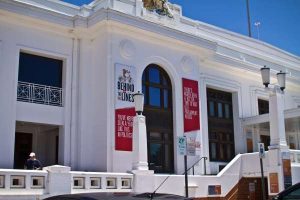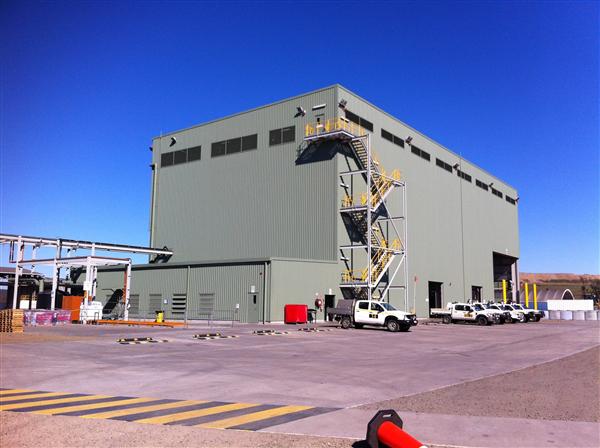
Based in Mackay, Queensland, WHF Group is a company with a reputation for delivering quality construction projects across a range of industries – from large-scale residential developments, to commercial buildings, schools and even mines.
Since 1993 the business has become one of the most versatile and respected construction companies in the state. But not so long ago, an increasing lack of visibility over job costs threatened to stifle growth. Something had to be done.
Needing more visibility on jobs
At the time, WHF was using accounting software MYOB Premier to handle back office processes. But they’d pushed it just about as far as it could go. “It was a good piece of software,” says CFO Greg Williams, “but we needed more visibility on our jobs, and Premier was never designed as a job-costing system”.
Williams explains: “In our industry we have to be competitive with our pricing, but we have to survive too. Without being able to see the true cost of jobs, it’s very hard for us to know exactly what margin we’re making and whether or not we’re actually profitable.”
So Williams and his team started looking for a system that would give them that information.
The right fit for a project based business
WHF looked at three or four contenders before finally settling on Exo. Among the reasons for choosing the MYOB system, price played a factor.
“Exo was certainly the cheapest of the systems we looked at. But what we really liked about it was the ability to do in-house customisation of data extraction. Being able to interrogate the SQL database was a big plus for us,” says Williams.
The tools available to project managers in Exo also made it a very good fit for a project-based business like WHF, according to its CFO.
An on-going partnership
To install the system, WHF turned to Maroochydore-based implementation company Momentum.
“The entire process went pretty smoothly. Momentum clearly knew their stuff. They came in and looked at the workflows we had set up in Premier, then set about replicating those in Exo.”
With hindsight, he says, he would have preferred to launch at the end of the financial year, but Q1 is always flat-out for WHF Group so they opted to do the install after that.
Easy to make simple changes
“When we first went live, there wasn’t much beyond Exo’s off-the-shelf capability that we really needed. Just a bit of tweaking around job costing. Since then, as people have got more used to the new system, we’ve started tailoring the screens so that users only see information that’s relevant to their role. We’re still perfecting that, but it’s getting better all the time,” says Williams.
That’s the thing with Exo; compared to many systems, it’s easy to customise.
“We’re happy to do most small changes ourselves, safe in the knowledge that if we need a report that’s a bit more complicated, we can get Momentum involved,” he adds.
Revolutionising visibility
One of the notable differences, now that WHF has had the system installed for a few months, is Exo’s flexibility. “It’s not just the SQL,” says Williams, “it’s the whole architecture. It’s the fact that if we need to, we can easily extract data from Exo and paste it into Excel”.
From a personal point of view, Williams says he’s in the system pretty much every day, keeping an eye on things. But it’s the project managers who have probably benefitted most from Exo.
“It’s really revolutionised the visibility they have on their projects. Previously they didn’t have access to a system. Now, with Exo, they can check outstanding purchase orders, look at profit and loss reports and generally get hold of timely information that enables them to do their jobs better,” he explains.
Keeping costs under control has always been the company’s main risk area. “Exo really does help minimise that. For the first time, we’ve got proper visibility on the progress of jobs and, as a result, a much better chance of bringing them in under budget,” Williams concludes.