

AI exposes weaknesses faster than businesses adapt…
News that the US Cybersecurity and Infrastructure Security Agency and other security researchers that they have seen what appears to be the first successful exploitation of critical vulnerabilities in PHP highlight the growing cybersecurity challenge in the age of AI.
While urging organisations to identify and inventory systems running PHP, CISA noted that the software is often embedded within other products and its presence ‘may not be directly observable’.
“Three percent of critical software security bugs that have ever been officially logged were found in the last month alone.”
CISA added the PHP vulnerabilities to its catalogue of actively exploited vulnerabilities last week after researchers at Perplexity uncovered the first successful exploitation of the vulnerabilities, saying a threat actor had achieved remote-code execution.
At one level, the incident is another reminder of the risks posed by critical software flaws. At another, it highlights something potentially more significant: AI is making it easier than ever to identify weaknesses hiding inside increasingly complex technology estates.
For years, organisations have relied on a combination of vulnerability scanning, asset inventories and security monitoring to understand their exposure. The challenge was often one of scale. Modern enterprises run thousands of applications, services, dependencies and open-source components spread across data centres, clouds and third-party platforms.
Many vulnerabilities remained difficult to find simply because understanding technology environments required significant human effort. Others were simply ignored – security researcher Stefan Esser warned about a flaw in PHP in 2004. Another researcher noted a related problem in 2020 and a partial fix was issued. By 2024 the bug underlying the PHP2Shell vulnerability was uncovered, but left unfixed.
Black October
AI, however, is changing the equation for both organisations and attackers. Large language models and AI-powered security tools are increasingly being used to analyse code, map software dependencies, identify vulnerable components and uncover relationships between systems. Tasks that once took security teams weeks can now be performed in hours or minutes.
The same is true for discovering and weaponising zero-day vulnerabilities, which was once considered a specialist skill requiring significant expertise, time and resources. Today, frontier AI models are lowering the barrier, helping identify serious flaws more rapidly and making advanced vulnerability hunting accessible to a much broader pool of attackers.
In PHP’s case, a cybersecurity company, Calif, offered to audit PHP earlier this year. Aided by advanced AI models from OpenAI, they identified a way to use the out-of-memory bug identified in 2024 and another one, to run arbitrary code on the host server, enabling an attacker to install malware or read critical data, and notified the PHP foundation.
Many, however, fear that the next AI-assisted discovery might not be from someone wanting to help and that PHP2Shell might be the canary in the coal mine, serving as an example of what’s to come for cybersecurity in the age of AI.
Jason Clinton, Anthropic’s deputy chief information security officer, warned on X that the cybersecurity landscape is likely to get ‘a lot worse’ before it gets better, warning ‘we need to hold on for ~18 months’.
The Electronic Frontier Foundation notes that in October – dubbed Black October by many due to the wave of vulnerability disclosures and cyberattacks accelerated or uncovered by AI – 13,000 new common vulnerabilities and exposures (CVEs) were submitted to the 400,000 CVE strong US National Vulnerability Database. “This means that three percent of critical software security bugs that have ever been officially logged were found in the last month alone,” the Foundation says.
“It’s likely that by the end of the year over a quarter of the software vulnerabilities that have ever been found will be from 2026.”
Obscurity no defence
If those predictions prove correct, PHP2Shell may be remembered as more than just another critical software flaw.
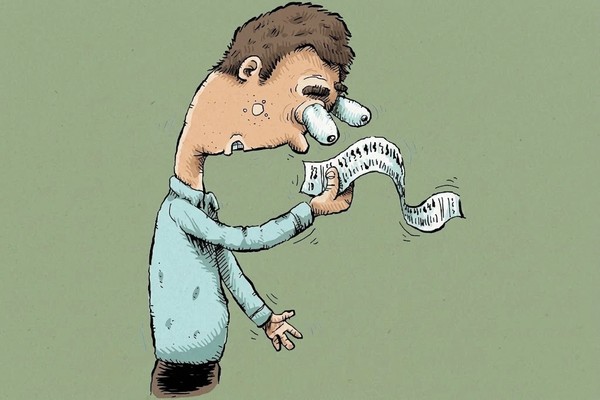
For years, organisations have been able to defer technology upgrades, delay patching programmes or tolerate incomplete asset inventories without immediate consequences. Complexity often worked in their favour. Vulnerabilities could remain buried in software dependencies or overlooked systems for years simply because finding them required significant time, expertise and effort.
AI is changing that dynamic. As Bain & Company noted in April when Anthropic’s Mythos was launched in a research preview (by June it, and Fable 5, had been publicly released only to be pulled three days later following an emergency US government export control directive, followed by release to ‘trusted’ partners the following month) AI does not create new vulnerabilities. “It exposes existing ones, making the chronic underinvestment that boards have tolerated for years an immediate and material business risk.”
As the cost of vulnerability discovery falls, the margin for error shrinks. Weaknesses that might once have remained hidden inside sprawling technology estates are becoming easier to identify, analyse and exploit. The same AI tools helping defenders uncover risk are also lowering the barriers for attackers.
That makes visibility, software governance and cyber resilience increasingly strategic concerns rather than purely technical ones.
“The danger at the heart of this evolution has not been exaggerated,” Bain & Company says. “Malign actors without coding expertise can now hack with the sophistication of a nation-state… Future attacks might not even need human intent amid signs that AI agents will sometimes act illicitly to fulfil a legitimate mandate.”
The challenge for organisations is no longer simply responding to vulnerabilities once they are disclosed. It is understanding what software they are running, where dependencies exist and which systems may already be exposed before somebody else finds them.
Rethinking vulnerability management in the AI era
Bain’s practical advice for business is not simply to patch faster, but to rethink how vulnerability management operates in an AI-driven environment.
It argues that most organisations are already struggling with a backlog of vulnerability alerts that far exceeds their ability to investigate and remediate manually. As AI accelerates the discovery of software flaws, that gap is likely to widen.
Rather than attempting to fix everything, organisations should focus on using AI to prioritise vulnerabilities based on exploitability, business impact and exposure, directing scarce security resources toward the risks most likely to be weaponised.
Cybersecurity’s New AI Imperative: Attacking the Backlog of Vulnerability Alerts notes that the challenge is increasingly one of triage rather than detection, with security teams needing better ways to separate critical threats from background noise.
The report also argues that organisations need to treat AI as a force multiplier for defenders, not just attackers. Companies should be investing in automated asset discovery, software inventory management, vulnerability prioritisation and remediation workflows that can operate at machine speed. In a world where AI can identify vulnerabilities in minutes, maintaining incomplete software inventories or relying on manual remediation processes becomes a significant business risk. Bain’s view is that organisations that combine AI-assisted discovery with stronger cyber hygiene, visibility and governance will be far better positioned than those relying on traditional vulnerability management approaches alone.
Whether PHP2Shell ultimately becomes a defining cybersecurity moment remains to be seen. But it has already exposed a reality that many organisations have been slow to confront: AI is changing the economics of vulnerability discovery far faster than most cyber programmes are adapting.
The question for business is no longer whether vulnerabilities exist. It is whether organisations can find and fix them before someone else does.