








Published on the 23/09/2026 | Written by Heather Wright
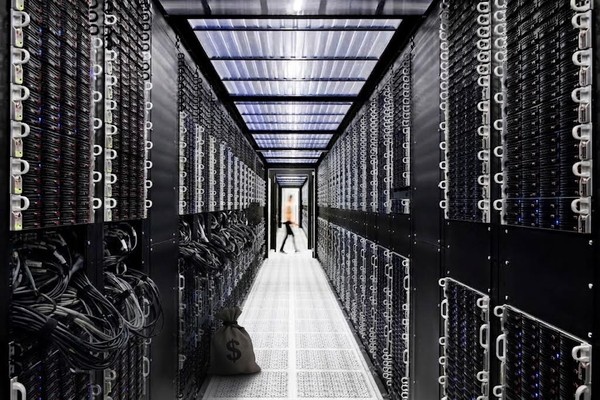
Can AI investment deliver benefits beyond data centres?..
Public-interest research payments and reserved computing capacity are among options being explored in by the Australian federal government as it considers how the benefits of AI should be shared across the economy.
The proposals, contained within new consultation paper from the Department of the Prime Minister and Cabinet on building AI infrastructure that works for Australia, form part of a broader push to develop national AI standards covering both large data centres and the training of advanced AI models in Australia.
“Australia cannot simply be a destination for infrastructure investment – we must and will leverage these advantages and translate them into long-term benefits.”
While much of the government’s AI infrastructure agenda has previously focused on issues including energy demand, water consumption, community impacts and planning approvals, the consultation also proposes mechanisms aimed at ensuring AI training activity delivers broader benefits to Australia.
“Australia cannot simply be a destination for infrastructure investment – we must and will leverage these advantages and translate them into long-term benefits for the Australian economy and people,” the consultation paper says.
It says Australia is well placed to attract investment in large data centres and frontier model training but argues that investment should be developed ‘for the benefit of Australians’ and proposed conditions for AI training that could include support for local capability, skills, research and innovation, saying frontier AI developers are ‘uniquely positioned’ to contribute to local research capability, technical talent development, university, TAFE and registered training organisation partnerships, and innovation ecosystems that cannot be fostered through investment in AI infrastructure alone.
“Investing in future industries and research and innovation, will help Australia build an enduring research base, strengthen local capability and capture more of the intellectual property and commercial value arising from AI training,” the paper notes.
Without mechanisms to encourage onshore research activity and investment in the broader research and innovation ecosystem, it warns Australia risks hosting AI infrastructure and training activity while the associated research outputs, model development, intellectual property and commercial returns accrue offshore.
Among the options suggested for securing contributions are public-interest research payments and reserved access to computing resources for research, public-interest activities and negotiated in-kind contributions. The paper also asks whether frontier AI developers are best placed to make contributions for local capability, skills, research and innovation, and whether others, such as hyperscalers and neocloud providers, should also be considered.
The proposals sit alongside a range of previously flagged requirements for large data centres, including expectations around energy use, water consumption, community engagement and workforce development. Prime Minister Anthony Albanese recently backed down on plans to force new data centre builds to be fully powered by renewable energy.
The government is also seeking feedback on requirements designed to ensure data centres do not increase costs for consumers and communities and make positive contributions to Australia’s energy transition.
AI’s ‘defining influence’ on Australian economy
The consultation document comes as the Treasury releases its Intergenerational Report 2026 which identifies AI as one of the most significant forces expected to shape Australia’s economy over the next four decades.
The report – the seventh in the series – describes AI as a potentially transformative general purpose technology and says Australia is well positioned to benefit from AI adoption and investment ‘if we get things right’ because of its stable institutions, renewable energy, potential and growing role as a destination for data centre investment. It also notes that investment by hyperscale cloud providers has accelerated significantly in recent years, with global capital investment expected to exceed $1 trillion in 2026.
“In Australia, the impacts of the AI investment boom are currently most pronounced in
physical infrastructure. Current industry estimates suggest Australia’s data centre pipeline
could support more than $150 billion in investment by 2030, the equivalent of five per cent
of today’s nominal GDP.”
It notes that AI will transform Australia’s broader industrial base as new technologies lift workplace productivity and change the skills in demand and has the potential to make essential services more accessible, affordable and responsive to individual needs.
However, the timing and extent of those changes is ‘uncertain’ as it depends on the rate of technical innovation and adoption.
“The challenge for Australia is to harness and share these benefits widely whilst mitigating its potential to generate societal harms such as misinformation, scams and malicious cyber operations.”
According to the consultation paper, attracting AI training activity could strengthen national security, science, innovation, resilience and business productivity. However, it argues that investment should also help build domestic capability.
Among the questions posed in the consultation are what obligations should apply to organisations undertaking frontier AI training in Australia, how AI training could support local research and innovation, and what mechanisms could be used to strengthen Australian skills and capability development.
The paper also raises the prospect of AI training activity contributing directly to Australian researchers and institutions, including the option of public-interest research payments and reserved computing capacity that could be used by researchers and public-interest projects.
The consultation does not recommend a preferred option and is seeking industry and public feedback on whether such measures are needed and how they could operate.
Consultation is open until 9 October 2026 with Albanese previously indicating that he wants to bring legislation to parliament in early 2027.