
Forget chatbots, think screwdriver...
When Roy Green and his team went looking for at global examples of the real-world potential of AI the most impressive project they uncovered in a tour of innovation hubs wasn’t a chatbot. It was screwdriving.
Banal? Perhaps. But Green, emeritus professor and special innovation advisor at UTS, says it has enormous value, eliminating variability, improving quality, optimising production processes and delivering measurable productivity and quality improvements. While it might not be making headlines, it may tell local businesses more about AI’s future than the latest wave of generative AI announcements.
“They turned the general-purpose AI into industrial AI to improve productivity of their manufacturing and create new opportunities.”
Green has been heading up a nine-month research program led by the University of Technology Sydney, looking at how organisations are putting AI to work in the real world. Rather than focusing on frontier models – which Green told iStart are beyond Australia and New Zealand to develop with their huge financial investments – the team looked at how manufacturers, technology companies and research institutions were applying existing AI technologies to solve practical business problems.
What they found was a common pattern: Successful organisations are turning general purpose AI into industrial AI – and reaping the benefits.
Green defines industrial AI as ‘the application of general-purpose AI to physical products and systems.
“It’s just whatever suits the production process that you’re applying it to,” he says. Rather than being a separate category or technology, it can involve generative AI, agentic AI, digital twins, sensors or smaller language models, with a common threat that the AI is applied directly to physical systems to improve productiity, quality and competitiveness.
For Green, industrial AI is about more than productivity. It’s about economic survival. Australia’s manufacturing sector has fallen from around 30 percent of GDP in the 1960s to roughly five percent today, while countries such as Germany continue to use advanced manufacturing to drive innovation and R&D investment. Industrial AI could help reverse that decline by enabling manufacturers to produce smarter, higher-value products and compete in global markets without trying to match overseas rivals on scale alone.
When machines talk back
While much of the AI conversation in Australia and New Zealand remains focused on copilots, content creation and workplace productivity, many European and Nordic organsiations are embedding AI directly into production systems, machinery, manufacturing processes and robotics.
“We visited several in the Netherlands, Germany, the Nordics,” Green says. “They had one common theme, that they turned the general-purpose AI into industrial AI to improve productivity of their manufacturing and create new opportunities.”
Some of the applications, like the screwdriving project in Dortmund, Germany, were surprisingly simple and unlikely to feature in a keynote presentation, but nonetheless adding ‘enormous value’.
Elsewhere, the researchers encountered examples involving sensors, digital twins and AI-driven manufacturing optimisation.
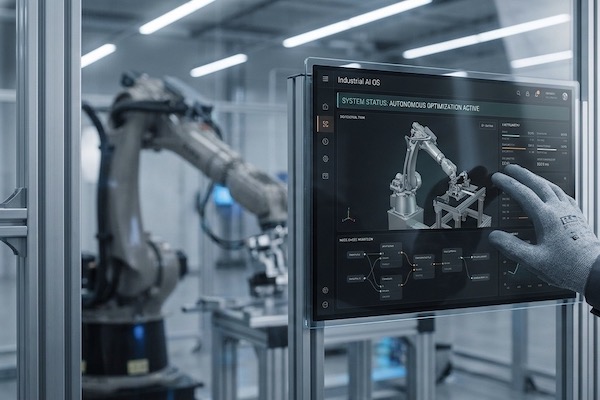
At Siemens in Munich, operators are already interacting with industrial systems through a ChatGPT-like interface. Instead of manually coding robots, workers can tell machines what they want in natural language, with the system generating the required code automatically.
“The screen just says, ‘How can I help?’,” Green says. “You just type in what you want, and it interprets through language how the machine should operate.”
It’s a glimpse into the world of physical AI: AI embedded into machines, robotics, warehouses and production environments rather than operating solely in software.
And it’s a market which is attracting growing attention from investors. Physical AI startups focused on warehouse automation, robotics and autonomous industrial systems attracted US$8 billion in venture capital funding during the first half of 2026, according to PitchBook.
From consumer to creator
For Green, however, the more important story is what happens next in Australia and New Zealand. He argues that there is a risk both countries will become merely consumers of AI, rather than creators of value from it.
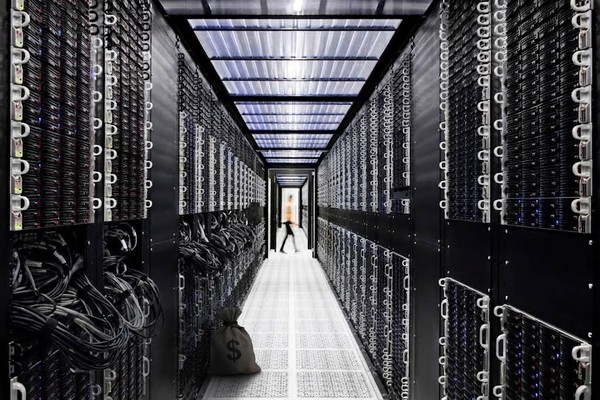
Industrial AI, he says, will be fundamental for A/NZ to escape that future. “Otherwise we’re just hosting data centres here as landlords,” he says. “They come here, they use up all the energy and the water, thanks very much, and export their data, which doesn’t mean anything to us because it’s all going out of wire somewhere. All while sucking our IP dry in the process.”
He’s critical of strategies that focus exclusively on attracting hyperscale infrastructure while overlooking opportunities to apply AI to domestic industries and production systems. Instead, he believes organisations should be identifying specific operational problems where AI can improve competitiveness.
The research also challenges the assumption that businesses need access to enormous frontier models to achieve results.
“For a lot of industrial applications you only need a small language model,” Green says. “We can develop those here, not very expensively.”
That may be particularly relevant for Australia and New Zealand organisations searching for pragmatic returns on AI investments. Rather than spending heavily on frontier models, organisations can deploy smaller, purpose-built models trained for specific tasks such as equipment monitoring, quality assurance or operational support.
Industrial AI, Green says, should not be viewed as a technology reserved for automotive giants or multinational manufacturers.
“No matter how big or small you are, you can make use of industrial AI and implement it in production systems and in the creation of new products,” he says.
The opportunities extend well beyond manufacturing. New Zealand’s horticulture sector, food producers and packing houses are obvious candidates, while Australia’s mining, manufacturing and resources industries are already rich in operational data that could be combined with AI, sensors and digital twins to improve quality, productivity and decision making.
Winning ecosystems
The research found successful innovation ecosystems consistently shared a similar structure. High-quality research institutions worked closely with industry. Large anchor organisations helped attract investment and talent. SMEs participated in connected supply chains. And businesses collaborated, rather than operating in isolation.
“It’s better to work in a clustered, place-based environment,” Green says.
For CIOs and business leaders, Green’s advice is less about chasing the newest AI release and more about identifying where AI can improve physical operations, products and production systems.
The companies making progress in Europe are not waiting for perfect conditions. Nor are they mesmerised by whichever model tops the benchmark charts this month.
“The lesson,” Green says, “is don’t get ready. Get started.”